

When A King Fought for Civil Rights in Our Country
In the mid-1950s, as the Civil Rights Movement was beginning to truly make its mark on the American social landscape, I was in the Air Force embarking on my career as an officer and pilot. It was an exciting time in my life as a dream that my younger self couldn’t have even thought possible was coming true. In fact, given the social climate at the time, it was an impossible dream for young Black man.
What I was doing and how I was doing it didn’t seem remarkable to me because I had successfully overcome the significant obstacles in front of me and simply become an accepted part of the almost exclusively white military officer corps. Strangely, my Air Force life shielded me from the realities of the Civil Rights struggle. My life was regimented by the rigid military schedule, command hierarchy, and intense flying schedule. As a young man in his 20s, I didn’t realize my potential effect on the Black freedom and rights struggle, but I watched in fascination as Dr. Martin Luther King, Jr. and his non-violent movement rose to national prominence.
In 1961, by the time I accepted President John F. Kennedy’s opportunity to join the NASA Space Program, the Civil Rights Movement and Dr. King were headline news on a daily basis—and I was in my own daily struggle fighting the powerful forces of racism against me within NASA. I was becoming a Civil Rights participant in my own right, but unlike Dr. King, it was a fight I didn’t necessary want to fight given it was counter to my military training to obey orders, not fight them. Although I did speaking engagements across this country to Black organizations, institutions, and schools, raising an overly political voice would have definitely put my NASA career in jeopardy. It was my job to provide hope for the community. Hope that we literally could reach for the stars.
After my time in the Air Force and NASA, I began to realize how little I actually knew about the African American struggle. I had spent my formative years integrating almost exclusive white institutions. From public libraries to my high school and university education to the Air Force to NASA. None of which taught me any significant Black history because it wasn’t important to them. In fact, it was insignificant in that world. “Black history” may as well have been a dirty word.
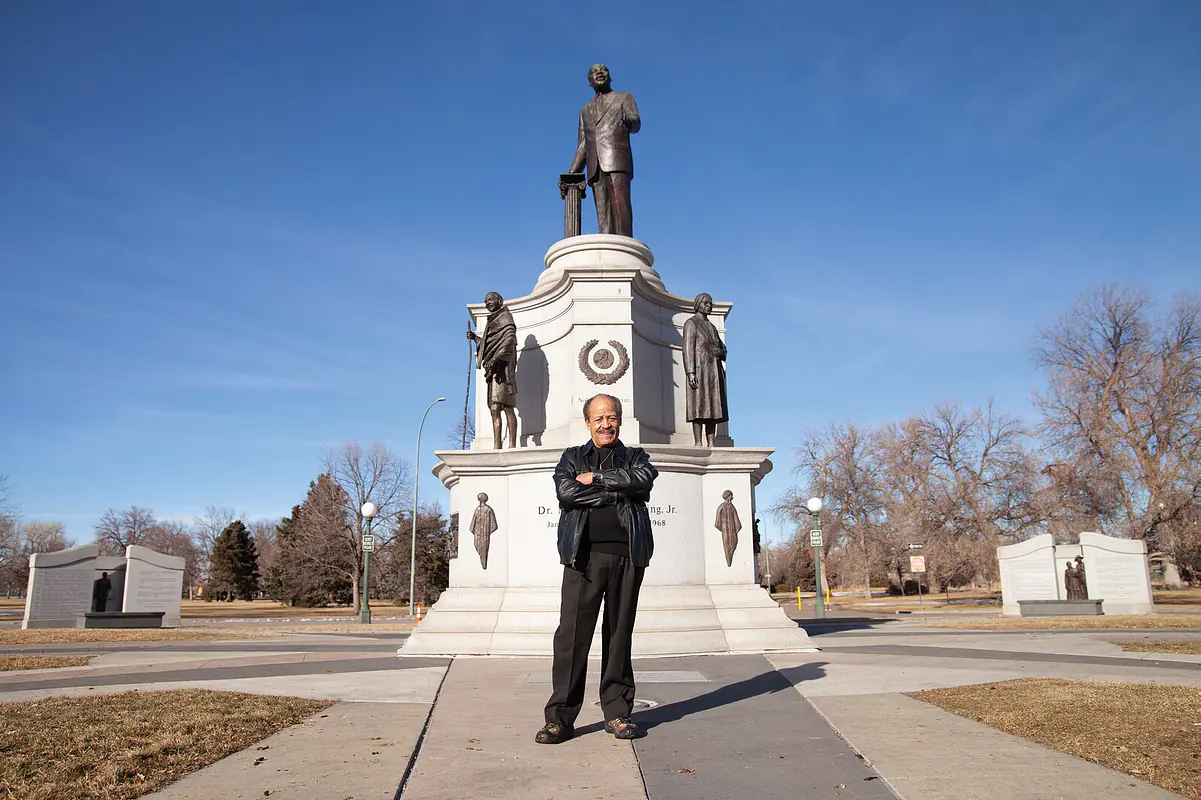
It wasn’t until the early-1970s, when I devoted my life to becoming an artist and began to understand the “Black Hole” that existed in documenting our struggles, accomplishments, and triumphs. It was then that I truly realized the enormous impact of Martin Luther King, Jr. on me, my community, and the world. He was the King who fought for Civil Rights, and I wanted the world to know through large-scale, highly visible public art. Over the years, I have completed seven high-profile tributes to Dr. King all over the United States. I have had the honor to memorialize Dr. King from Atlanta to Houston to California, including the second largest tribute to him in the U.S. located in Denver’s City Park (see the Spirits of the Past section in this month’s issue of In The Spirit Magazine). You can visit my website see all the locations.
In closing, as we celebrate Dr. King’s birthday this month, my hope is his legacy continues to live in us all as we navigate the continued challenges we face. He truly represented being an Undeniable Spirit. And, America is better for it.